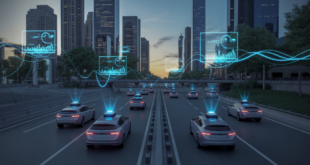
The Future of Artificial Intelligence: Transforming Our World

AI technology transforming healthcare, business, and daily life

AI Technology: Trends, Ethics, and Future Impact

AI technology is no longer a futuristic idea found only in science fiction. It has become part of everyday life, shaping how people work, learn, communicate, create, and solve complex problems. From healthcare and education to business, transportation, and scientific research, intelligent systems are changing the way modern society operates.

The rise of artificial intelligence brings exciting opportunities, but it also creates important questions about privacy, fairness, safety, jobs, and human control. Understanding both the benefits and the risks is essential for anyone who wants to follow the future of technology.

AI technology transforming healthcare, business, and daily life
AI technology is becoming a major force across industries and daily life.

The Current State of AI Technology

Today’s intelligent systems can perform tasks that once required advanced human expertise. They can analyze large amounts of data, recognize images, understand language, generate content, support medical research, and assist with decision-making. These improvements are helping businesses and individuals complete complex work faster and more efficiently.

According to the Stanford AI Index Report 2025, artificial intelligence is increasingly embedded in everyday life, with strong growth in business adoption, healthcare applications, autonomous systems, and generative tools. This shows that the technology is no longer limited to research labs; it is now actively shaping real-world industries.

Key Areas Where Artificial Intelligence Is Making an Impact

Natural Language Processing

Language models can now summarize documents, answer questions, translate text, write code, support customer service, and help users create content. These systems are especially useful for businesses, students, writers, developers, and researchers who need faster access to information.

Computer Vision

Computer vision allows machines to understand images and videos. It is used in medical imaging, security systems, quality control, self-driving vehicles, and creative tools. As visual recognition improves, more industries are adopting image-based automation.

Healthcare and Medical Research

In healthcare, intelligent tools can assist doctors with diagnosis, medical imaging, drug discovery, and personalized treatment planning. These systems do not replace medical professionals, but they can help improve speed, accuracy, and access to better insights.

Creative Work and Content Generation

Generative tools are changing how people create text, images, music, video, and software. Writers can draft articles faster, designers can test visual ideas, and developers can build prototypes more efficiently. For readers interested in creative tools, see our guide on AI art and image generator websites.
Generative tools creating text images music and code

Generative systems are changing how people create digital content.

Emerging Trends Shaping the Future

Generative Models

Generative models can produce original content from simple prompts. They are being used for marketing, design, education, software development, entertainment, and research. Their growing popularity shows how quickly creative and professional workflows are evolving.

Edge Computing and Smart Devices

More processing is moving from cloud servers to local devices such as phones, cameras, vehicles, and sensors. This trend can improve speed, reduce latency, protect privacy, and support real-time decisions in smart homes, factories, and connected cities.

Scientific Discovery

Intelligent systems are also becoming powerful tools for science. They can help researchers identify patterns, simulate experiments, analyze data, and speed up discovery in fields such as medicine, chemistry, physics, and climate research. You can read more in our article about how AI is becoming the engine of scientific discovery.

Ethical Challenges and Responsible Development

As these systems become more powerful, responsible development becomes more important. The biggest concerns include bias, privacy, misinformation, job disruption, transparency, and safety. If these challenges are ignored, the technology can create harm instead of progress.

The NIST AI Risk Management Framework provides guidance for managing risks related to artificial intelligence. It focuses on building systems that are more trustworthy, secure, transparent, fair, and accountable.

Powerful technology requires careful governance, responsible design, and human oversight. The goal should not only be innovation, but innovation that protects people and supports society.

Main Risks to Consider

  • Bias and fairness: Systems can reflect or amplify unfair patterns found in training data.
  • Privacy: Large data requirements can create risks for personal information and user security.
  • Job disruption: Automation may change traditional roles and require new skills.
  • Misinformation: Generated content can be used to spread false or misleading information.
  • Safety and control: Developers must ensure systems behave as intended and remain under human supervision.
Responsible AI technology with human oversight and ethical safeguards
Responsible development requires fairness, transparency, privacy, and human oversight.

The Path Forward

The future of intelligent systems depends on cooperation between researchers, governments, companies, educators, and communities. Strong governance, better education, transparent design, and inclusive development can help ensure that the benefits reach more people.

Workers will also need new skills. Instead of thinking only about replacement, society should focus on training people to work with advanced tools. This includes digital literacy, data understanding, critical thinking, cybersecurity awareness, and ethical decision-making.

Conclusion

AI technology is one of the most transformative forces of the modern era. It can support creativity, improve healthcare, accelerate scientific discovery, increase productivity, and solve problems that were once difficult to approach. At the same time, it must be developed with responsibility, fairness, and transparency.

The choices made today will shape how this technology affects future generations. If society combines innovation with strong ethical safeguards, intelligent systems can become a powerful tool for human progress, creativity, and well-being.

About admin

I am Content Creator, Web Developer, Content and Blog Writer, a Python Coder, A Tech Reviewer and Researcher, My Patience is Unlimited if it is About TECH.